
By the Loanspot.ca editorial team · Published December 2024 · Last updated August 13, 2026
Looking for online lenders for no credit in Canada? The best online lenders for no credit don’t ignore your credit, they weigh your income, banking history, and employment instead of relying only on a credit score. This guide shows you how to compare them, what a fair offer looks like, and how to avoid the scams that target borrowers with thin credit.

If your credit history is short, bruised, or non-existent, walking into a big bank rarely ends well. That is why so many Canadians turn to online lenders for no credit, digital lenders and lender-matching services that look at the full picture of your finances rather than a single three-digit score. Many of the same companies also run loan apps, which follow the same licensing and cost rules as their websites. The catch is that this corner of the market is also where most predatory offers and outright scams live, so knowing how to tell a legitimate lender from a trap matters more here than almost anywhere else in personal finance.
This is not a “click here for guaranteed cash” article, because no honest lender can guarantee approval. Instead, it is a practical buyer’s guide: what “no credit check” actually means, how reputable online lenders for no credit decide who to approve, what a fair cost looks like under Canadian law, and the warning signs that should make you close the tab. At Loanspot.ca we match borrowers with vetted Canadian lenders, so we see both the good offers and the bad ones every day.
What “No Credit Check” Really Means in Canada
The phrase “no credit check” is used loosely online, and it rarely means a lender knows nothing about you. In practice, when people search for online lenders for no credit, they usually fall into one of three situations: a soft credit check that does not affect your score, an alternative-data review that leans on your bank statements instead of your bureau file, or a true no-bureau-pull product where the lender simply accepts more risk in exchange for a higher rate.
- Soft check: The lender views a summary of your credit without leaving a hard inquiry. Most reputable Canadian online lenders work this way, you can shop around without dinging your score.
- Bank-statement review (open banking / IBV): Instead of your bureau report, the lender securely verifies your income and account activity. This is the most common path for borrowers with thin credit.
- True no credit check: Genuinely rare from licensed lenders, and almost always the most expensive. If a loan is large and advertised as zero-check, treat it with suspicion.
Understanding which type you are dealing with is the first filter. A lender that runs a soft check and reviews your banking is being responsible; a lender promising large sums with absolutely no verification is usually either charging punishing rates or running a scam. If you want to understand the file lenders look at, our guide to what’s on your credit report is a useful starting point.
How Online Lenders for No Credit Assess You
When your credit score is not the deciding factor, lenders need other signals to judge whether you can repay. The good news is that these signals are things you can usually demonstrate, even with a damaged bureau file. Reputable online lenders for no credit typically weigh four things.
- Income stability: Steady employment income, full-time or part-time, is the single biggest factor. Lenders want to see that money lands in your account on a predictable schedule.
- Banking behaviour: No bounced payments, no chronic overdraft, and a positive balance trend tell a lender you manage cash responsibly.
- Existing obligations: Your debt-to-income ratio matters. Even a strong income looks risky if most of it is already committed to other payments.
- Affordability of the request: A modest loan you can clearly repay is far easier to approve than a large one that stretches your budget.

This is why income verification (often called IBV, or instant bank verification) has largely replaced the credit pull for this market. It lets a lender approve someone the bureau would reject, while still confirming the loan is affordable. If your credit is the main obstacle today, working on it in parallel pays off, see our guide on how to improve your credit score so your next loan comes with better terms.
Types of Online Lenders for No Credit in Canada
“No credit lender” is an umbrella term that covers several very different products. Knowing which one you are looking at helps you judge whether the rate is fair and whether it suits your situation. Most online lenders for no credit fall into one of these categories.
- Installment lenders: You borrow a set amount and repay it in fixed payments over months. This is the most common and usually the most manageable option for amounts above a few hundred dollars, with rates running up to the 34.99% legal cap.
- Payday lenders: Small, very short-term advances repaid on your next payday. They are easy to get but carry the highest effective cost, so they are best reserved for true emergencies and small amounts.
- Lines of credit: A revolving limit you draw from as needed and only pay interest on what you use. Some online lenders for no credit offer these to borrowers with steady income.
- Lender-matching services: Rather than lending directly, these match your single application to multiple licensed lenders. This is the lowest-friction way to compare offers without multiple hard inquiries.
For most borrowers with thin or damaged credit, an installment loan or a matching service strikes the best balance between accessibility and cost. Payday products can solve a one-off cash crunch, but leaning on them repeatedly is a sign it is time to rebuild credit and move to a cheaper product. Whichever route you take, the lender should still verify that the loan is affordable, a responsible no credit lender protects you as much as itself.
How to Choose the Right Lender: A Checklist
Not all online lenders for no credit are created equal. Before you share a single piece of personal information, run any lender through this checklist. A trustworthy option will pass every item without hesitation.
- Is it licensed in your province? Lending is regulated provincially in Canada. A legitimate lender will name its licence and the province it operates in.
- Is the full cost disclosed up front? You should see the annual percentage rate (APR), all fees, and the total cost of borrowing, not just a weekly payment.
- Are the terms in writing before you commit? A real agreement spells out the amount, schedule, and what happens if you miss a payment.
- Does it never ask for an upfront fee? Legitimate Canadian lenders deduct costs from the loan or your payments. They do not ask you to pay first to “release” funds.
- Is customer support real and reachable? A phone number, a Canadian address, and responsive support are basic signs of a genuine business.
- Are the reviews credible? Look beyond the testimonials on the lender’s own site. Check independent sources and complaint records.
Using a reputable lender-matching service can shortcut a lot of this work. Rather than applying to a dozen sites individually, and risking a dozen hard inquiries, you submit one request and get matched with lenders who already fit your profile. That is the core of how no credit check loans work through Loanspot.ca: one application, soft-check matching, and only licensed Canadian partners.
What These Loans Cost: Rates, Fees and the 35% Rule
Because online lenders for no credit take on more risk, their rates are higher than a prime bank loan. That is the trade-off for accessibility. What is not negotiable is the legal ceiling: under Canada’s Criminal Code, the maximum allowable annual rate of interest is 35% APR. Any installment lender quoting more than that is breaking the law.
- Installment loans for borrowers with weak credit typically range from the high teens up to the 34.99% legal cap, depending on the lender and your profile.
- Payday loans are regulated separately and capped per-province by dollar cost (for example, a maximum fee per $100 borrowed), not by APR, which is why their effective cost is so high. Read our breakdown of payday loans in Ontario before choosing one.
- Fees, origination, late, or NSF charges, must be disclosed. Add them to the interest to see the true cost of borrowing.

The single best habit is to compare the total cost of borrowing, not the payment. A loan with a low weekly payment but a long term can cost far more than a higher payment over a shorter term. Always ask: how much will I have paid in total by the end? If a borrower needs a larger sum, our guide to bad credit personal loans for $5,000 walks through how amount, term, and rate interact.
Red Flags: Spotting a Predatory or Fake Lender
The flip side of easy access is that scammers know borrowers with no credit are motivated and may overlook warning signs. When you evaluate online lenders for no credit, treat any of the following as a reason to walk away immediately.
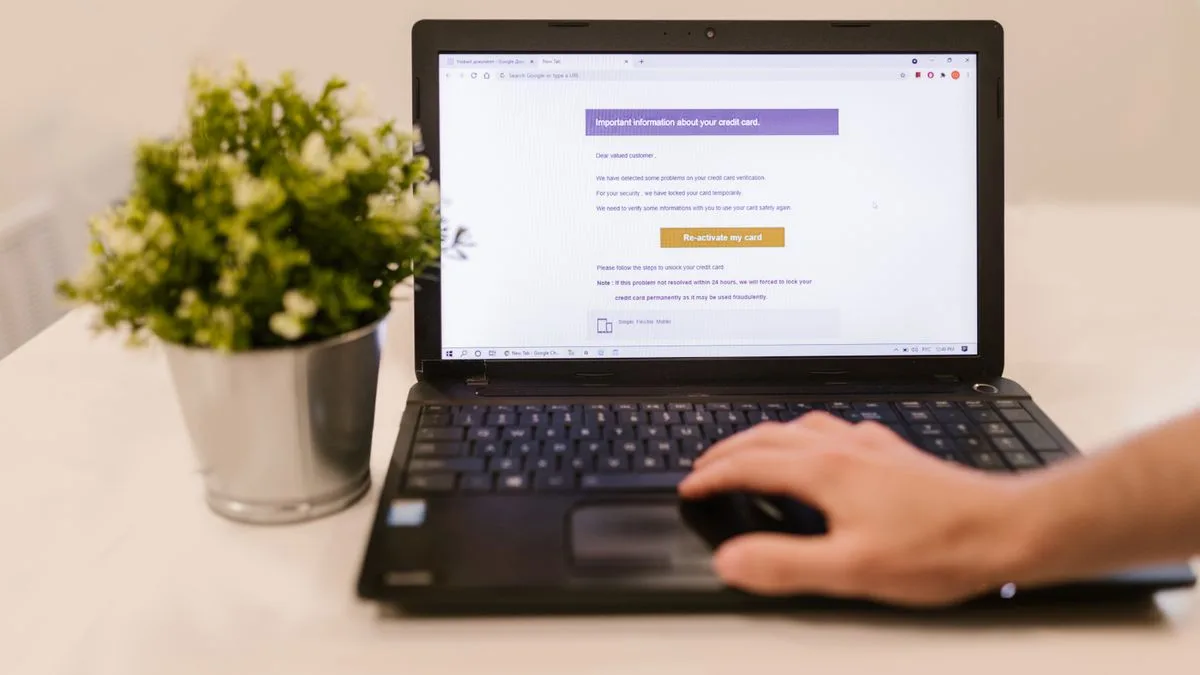
- “Guaranteed approval.” No legitimate lender can promise this. Honest lenders say “bad credit considered” or “high approval rates,” never “guaranteed.”
- Upfront fees. Being asked to send money, especially by e-transfer, gift card, or crypto, before you receive your loan is the classic advance-fee scam.
- Pressure and urgency. “Offer expires in one hour” tactics exist to stop you from thinking or comparing.
- No physical address or licence. If you cannot find where a lender is based or whether it is licensed, assume the worst.
- Requests over insecure channels. A lender asking for your full banking password, or pushing you to a sketchy link by text and email, is a red flag. Real lenders use secure verification.
- Rates above 35% on an installment loan. That is illegal in Canada, full stop.
If something feels off, it usually is. You can report suspected fraud to the Canadian Anti-Fraud Centre and check a lender’s standing before you commit. Sticking to licensed lenders, or a matching service that only works with them, removes most of this risk.
How to Apply and Improve Your Odds
Applying to online lenders for no credit is usually quick, but a little preparation noticeably improves your approval odds and the terms you are offered. Here is what a smooth application looks like.
- Gather your basics: a valid Canadian ID, proof of income (recent pay stubs or bank statements), and an active Canadian chequing account.
- Borrow only what you need: a smaller, clearly affordable request is approved more often and costs less.
- Be accurate: mismatched income or address details slow approvals and can trigger declines.
- Use one matching application: instead of scattering hard inquiries, apply once and let the service match you with suitable lenders.
- Read before you sign: confirm the APR, total cost, payment schedule, and any fees in the written agreement.
Once approved, most online lenders fund by direct deposit or Interac e-Transfer, often within one business day. If speed is your priority, see how instant e-transfer loans work and what affects funding time.
Smarter Alternatives to Consider First
A no-credit loan is a useful tool, but it is not always the cheapest answer. Before you borrow, it is worth a quick look at lower-cost options, sometimes one of these solves the problem without the higher rate.
- A secured or credit-builder product can be cheaper and rebuild your score at the same time.
- Asking your existing institution for a small overdraft or line of credit, especially if you have a long banking relationship.
- A co-signer or guarantor with stronger credit can open up a better rate than a no-credit product.
- Negotiating the bill or expense you are borrowing for, many providers offer payment plans.
If none of those fit and you do need to borrow, the goal is simply to do it on fair terms from a licensed lender. Explore your borrowing options and compare a few matched offers before deciding.
The bottom line: the best online lenders for no credit are the ones that are transparent, licensed, and willing to verify that a loan actually fits your budget, not the ones shouting the loudest about “guaranteed” cash. If you focus on the total cost of borrowing, stay inside the 35% legal cap, and refuse any lender that asks for money up front, you have already filtered out almost every bad actor in this market. Borrow only what you can comfortably repay, keep the term as short as you can manage, and use each loan as a stepping stone toward stronger credit and cheaper options next time.
Online lenders for no credit serve every Canadian province and territory, and all licensed lenders must keep the total cost of borrowing within the federal 35% APR cap.
Is Loanspot.ca Legit for No-Credit Borrowers?
Yes. Loanspot.ca is a Canadian comparison service, not a lender: one application is shown to multiple licensed Canadian lenders, comparing never affects your credit score, and using the service is free. Lenders pay a referral fee that is never added to your loan cost, and every matched offer has to stay under the federal 35% APR cap with the full cost disclosed in writing before you sign.
One point of confusion worth clearing up: Loanspot.ca is not affiliated with loanspot.ai or any other similarly named site, so check the domain when you compare reviews. And vet any lender you are matched with the way this guide describes: licence first, total cost in writing, and never an upfront fee.
Frequently Asked Questions
Can I really get a loan with no credit in Canada?
Yes. Many online lenders for no credit approve borrowers based on income and banking history rather than a credit score. Approval is never guaranteed, but a steady income and a healthy bank account go a long way, even with a thin or damaged credit file.
Do online lenders for no credit do a hard credit check?
Most reputable ones use a soft check or verify your bank statements instead, neither of which lowers your score. A few products genuinely skip the bureau pull entirely, but those tend to be the most expensive, so always confirm the cost first.
Is “guaranteed approval” real?
No. No legitimate lender can guarantee approval before reviewing your application. Any site promising guaranteed approval, especially alongside upfront fees, is a major red flag and often an outright scam.
What is the most I will pay in interest?
For installment loans, Canadian law caps the annual rate at 35% APR, so a licensed lender cannot legally charge more. Payday loans are capped separately by provincial dollar limits. Always compare the total cost of borrowing, not just the payment.
How fast can I get the money?
Many online lenders fund by direct deposit or Interac e-Transfer within one business day of approval, and sometimes the same day. Funding speed depends on the lender, your bank, and when you are approved.
Will applying hurt my credit score?
If the lender uses a soft check or bank verification, applying will not affect your score. Applying to many lenders that each run a hard inquiry can, which is why a single matching application is the safer way to shop.
Ready to compare real offers? Learn more about no credit check loans in Canada, or review your wider borrowing options before you apply.
If a past setback hurt your credit, our guide to second chance loans in Canada explains how to borrow and rebuild at the same time.
Need a specific mid-size amount? See how a $5,000 personal loan in Canada works with all credit types considered.
Looking to borrow just a little? Our $50 loan guide covers realistic small-loan options and what they cost.
Curious what “no credit check” actually means? See our explainer on no credit check e-transfer loans in Canada and how to spot the scams. Curious how investor-funded platforms compare? Our guide to peer-to-peer loans in Canada covers costs, timelines and approval odds. Weighing a flat-rate direct lender? Our Magical Credit review covers the 34.86% math. Rebuilding through a car loan instead? Our Iceberg Finance review covers the second-chance route. Dealing with collections? Our Progressa review covers the debt-consolidation specialist’s published range. Searching for a brand that vanished? Our Refresh Financial guide explains the Borrowell takeover and the routes that replaced it. Seen the scam threads about a big online lender? Our Spring Financial review separates the loan from The Foundation. Borrowing under $2,000? Our Freedom 500 Loans review prices the micro-loan tier honestly. Weighing a big-brand lender? Our easyfinancial review gives the honest answer. Considering a no-credit-check brokerage? Read our honest Lamina loans review before paying brokerage-fee pricing.